
SWIFT/BIC Codes.
Find the correct SWIFT code for a wire transfer. Search by bank and country to get the correct SWIFT code. If you already have a unique code, verify its authenticity by checking it here.
Check a SWIFT code
Enter a SWIFT number to identify its corresponding bank and country.
Enter a SWIFT code
Find SWIFT codes
Select a country and locate the correct SWIFT codes for an international transfer.
Select a country
Popular SWIFT Codes
Here are some popular SWIFT/BIC code formats for banks in various countries:
 Germany | DEUTDEFFXXX |
 United Kingdom | HBUKGB4BXXX |
 France | BNPAFRPPXXX |
 Spain | BSCHESMMXXX |
 Italy | UNCRITMMXXX |
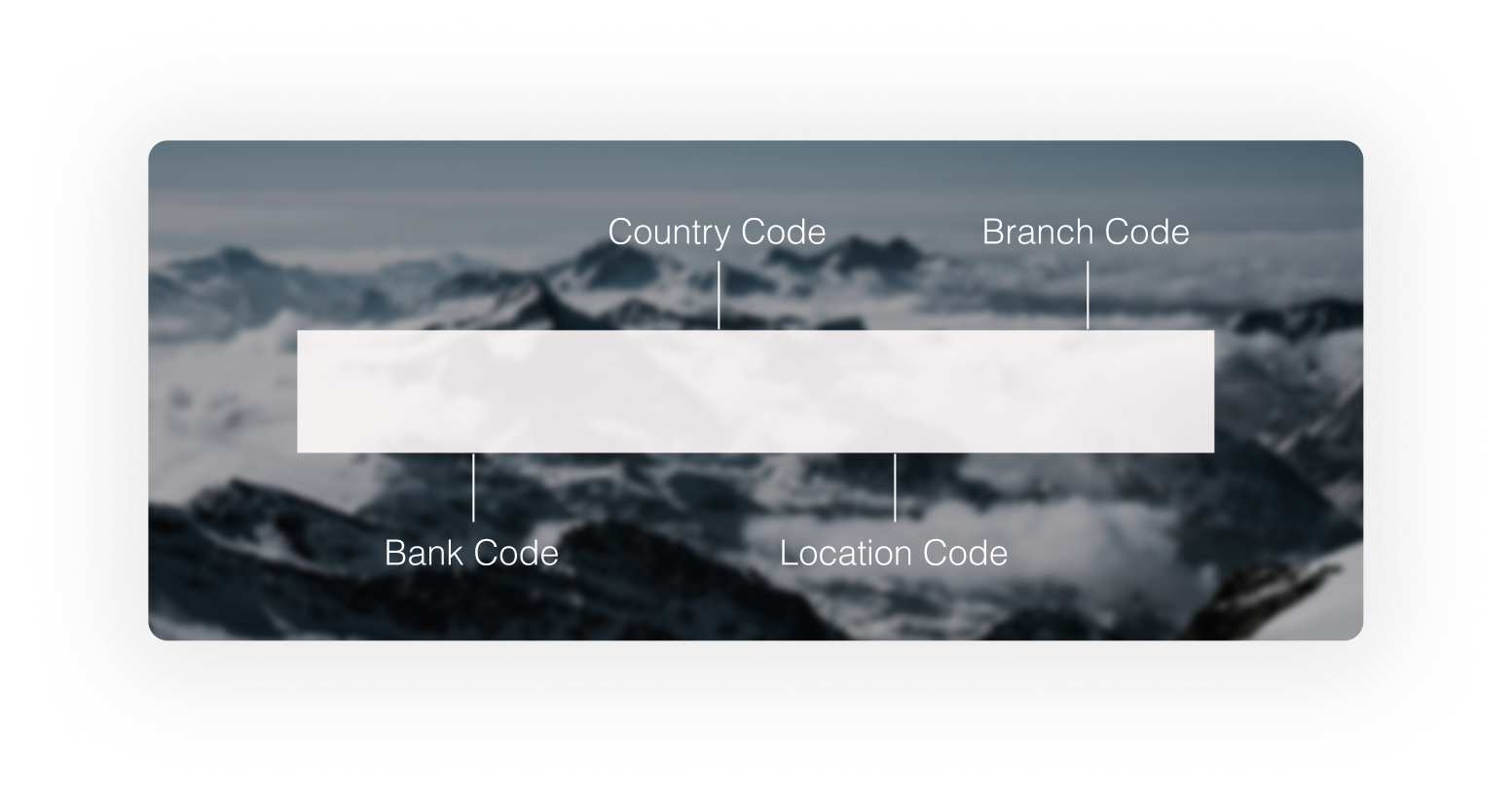
Example of a SWIFT Code
AAAA
Bank code
BB
Country code
CC
Location code
123
Branch code
A SWIFT code comprises 8 to 11 characters.
The first four characters – AAAA
Represent the unique code assigned to financial institutions worldwide.
The next two characters – BB
Represent the country in which the bank is located.
The next two letters – CC
Represent the location of the bank's head office.
The last three characters – 123
Identify the specific banking branch.
This part isn't always present in a SWIFT code.
UBSWCHZH10A is a sample SWIFT code.
 UBSWCHZH10A
What are SWIFT codes?
SWIFT codes are unique characters that identify every bank connected to the SWIFT messaging system.
SWIFT is an abbreviation for Society for Worldwide Interbank Financial Telecommunication, the standard network banks use to exchange information, particularly for international payments. A unique code identifies every bank connected to this system.
SWIFT codes are necessary when sending or receiving a money transfer from foreign banks.


When do you need a SWIFT code?
You will need a SWIFT code whenever you want to send money to a bank located overseas. This code instructs your bank to communicate with the recipient bank to deposit money into the recipient account.
If you are expecting international payments, the senders will need your bank SWIFT code to facilitate the transfer of funds.
You do not need a SWIFT code for domestic money transfers. Domestic transfers rely on routing numbers and other identifiers, not SWIFT codes.
Where can I find my SWIFT/BIC code?
You can find your bank SWIFT code on its website and banking portal. You can also find it in your banking statements or use a SWIFT code checker, such as the one on this page.

FAQs
What are SWIFT codes?
SWIFT codes are unique characters that identify every bank connected to the SWIFT banking messaging system. They comprise 8 to 11 characters that identify the bank, its country of origin, headquarters, and branch.
What does BIC mean?
BIC is an abbreviation for Bank Identifier Code. It is another word for a SWIFT code.
What is the difference between BIC and SWIFT codes?
There is no difference between them. SWIFT and BIC are the same thing.
Is a SWIFT code the same as an IBAN?
No, they are not the same thing. IBAN stands for International Bank Account Number, a unique code that identifies a specific bank account for international transactions. It is primarily used in Europe. In contrast, a SWIFT code identifies the bank to which a foreign payment is being sent, not the specific account. It is the globally recognised standard for processing foreign payments.
How does a SWIFT code work?
SWIFT is the standard messaging system used by banks worldwide to send and receive payment instructions. A SWIFT code identifies every bank connected to this system. When you initiate a foreign transfer, your bank uses the SWIFT code to contact the receiving bank and instruct it to deposit money into the specified account. SWIFT codes facilitate seamless foreign transfers. You can find your bank SWIFT code on its website or on your banking statement. Likewise, you can use our Bivial SWIFT code checker to find the correct code.
Do I need a SWIFT code or an International Bank Account Number (IBAN)?
It depends on the country where your recipient is located. In many European countries, both a SWIFT code and an International Bank Account Number (IBAN) are required to process international transfers. However, in many other countries, such as Brazil and the United States, an IBAN is not required for foreign deposits.
Why do banks use SWIFT/BIC codes?
SWIFT/BIC bank details ensure that banks deposit money into the correct financial institution and recipient account, thereby avoiding serious mistakes with customer funds.